

Molecular Solutions for Cosmetics
Laboratory Testing for Cosmetics is essential to ensure product safety, efficacy, and regulatory compliance. Cosmetic products may be exposed to microbial contamination during production, storage, or use, which can pose risks to consumers and affect product quality. Molecular cosmetic testing provides advanced tools to detect pathogens, monitor the microbiome, and verify ingredient authenticity, helping manufacturers maintain the highest safety and quality standards while supporting their product claims.
At QACS, we use DNA-based technologies, the future of cosmetic testing, to deliver fast, cost-effective laboratory testing for cosmetics. Molecular approaches provide unparalleled accuracy and sensitivity, enabling precise microbiome analysis, microbiological surveillance, authenticity testing and many more. By leveraging DNA testing, cosmetic manufacturers can quickly detect contaminants, verify ingredient authenticity, and ensure their products are safe and compliant with all regulatory requirements.
DNA testing offers numerous benefits for the cosmetic industry, including reduced testing times, early detection of potential risks, more reliable results compared to traditional methods, and stronger support for product claims. It empowers brands to maintain high-quality standards, protect consumers, and respond proactively to any production or safety concerns.
For laboratory testing solutions, our dedicated team of scientists provides comprehensive data and actionable insights tailored to your product’s specific needs. With QACS, cosmetic manufacturers gain reliable, efficient, and innovative testing services that enhance product quality, substantiate marketing claims, and strengthen regulatory compliance.
Contact us today to learn how our Cosmetic Molecular Solutions and DNA-based testing can support your product development, safety assurance, and future-ready compliance strategy.
With 20+ years of clinical efficacy testing experience and technical know-how of molecular biology tools, QACS offers cosmetic skin Microbiome testing in the form of clinical trials to substantiate product microbiome claims. Our dedicated team of scientists (dermatologists, microbiologists and molecular biologists) offers variety of clinical evaluation options to address your product needs and budget in the form of customized protocols.
The first step to resolve a microbiological issue is correct Microorganism Identification. QACS provides accredited Microorganism Identification to benefit Quality Assurance & Quality Control processes. Species level Identification for Bacteria, Yeasts and Fungi is provided after investigation of the microbiological origin and analysis of the deeper causes. Information on the ecology, classification, growth conditions and possible pathogenesis are also given. The identification is offered in the shortest possible time (24h) using DNA technology.
DNA identification techniques present a reliability advantage over other methods e.g. APIs that are metabolic, MALTI TOF or other immunochemical methods.
Worldwide pathogenic bacteria are a growing public health concern. We perform fast (24h) and accurate pathogen detection via Real Time PCR to ensure product safety.
Pathogenic bacteria of the genus Salmonella, Listeria, Shigella and others after enrichment are detected in 24h via Real Time PCR.
QACS Lab provides accredited screening testing methods for the identification of pork DNA in cosmetics.
Botanical authenticity for personal care products assists manufacturers and R&D organizations provide assurance into the sourcing of natural ingredients. QACS performs botanical authenticity for cosmetics with a sensitive and reliable molecular method, Real Time PCR. Botanical authenticity can be supported from Allergen screening testing.
Genetic identity e.g. Barcoding is a powerful tool in favor of botanical authenticity. By analyzing and “reading” a piece of DNA containing the plant genetic identity, an indisputable “DNA certificate” of the species of the organism is obtained. In this way, the product or raw material acquires a seal of authenticity and the producer or distributor is protected from counterfeiting (replacement of part or all of it by another product of lower value) and the product acquires added value.
Using Metagenomics we study the genetic material of microorganisms in a given environment to provide valuable insights for quality control and safety in the cosmetic industry.
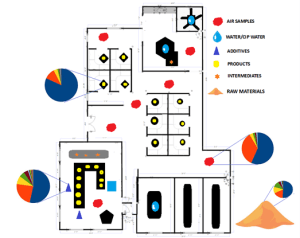
Primary goal of Environmental Monitoring and MMS is to help brands maintain high-quality standards in their cosmetic production processes by closely monitoring & understanding the microbial populations within their facilities. We combine long-standing microbiology experience of plant areas with the power of NGS and Metagenomic Mapping to accurately:
- Map and monitor the complete microbiome of your production facility.
- Pinpoint pathogens and contaminants in the environment.
- Identify their routes and biofilms.
- Track their sources proactively.
- Gain full insight of the microbial populations in your production before it affects your products.
- Use the data retrospectively to identify possible sources of contamination in case of QC failure.
Untargeted approach: You only find what you are looking for! The presence of bacteria in production environments poses a constant threat to QA/QC managers who might face a huge challenge concerning recalls. The classical approach with swabs and culture plates only detects a limited number of microorganisms and often results are difficult or even meaningless to interpret.
Microbial Mapping from QACS Lab gives an untargeted approach to this procedure revealing the full picture:
-
- Samples are taken from all important sources in the production environment.
- Total DNA is isolated from all samples and sequenced with NGS.
- The full depth of the microbiome of each sample is revealed from each sample analysis.
- Combining the results of each sample a full microbiome map of the production environment is revealed.
- Metadata analysis, heatmaps and most of all our expert’s insight results in a comprehensive report with clear interpretation of the finding and suggestions for corrective actions.
For cosmetic manufacturers looking to dive into the depths of skin secrets, Quorum Quenching constitutes an innovative analysis providing key solutions regarding skin bacteria communication.
Our skin is home to a diverse array of skin microorganisms which play an essential role in skin health maintenance and protection against pathogens. These microorganisms, collectively known as skin microbiome, communicate continuously. But how does this communication happen?
The process used by bacterial cells to communicate with each other, and coordinate their behavior based on population density is named quorum sensing. Through quorum sensing, this social network of microbes communicates so effectively that it can modulate gene expression and behavior of entire populations!
What is Quorum Quenching – It is the process of disrupting or inhibiting quorum sensing in microorganisms by using natural or synthetic compounds that interfere with the production, detection, or response to quorum sensing molecules. Quorum Quenching has been proposed as a potential strategy to modulate skin microbes behavior and to promote skin health. For example, it can be used to disrupt the biofilms formed by pathogenic skin microbes, making them more susceptible to immune clearance and antimicrobial agents.
How we do it – We have developed a protocol for screening cosmetic formulations, for their ability to inhibit quorum sensing of targeted microbes such as P.acnes and S.aureus. Quorum Quenching Analysis from QACS Lab has been developed so our customers could produce breakthrough quorum quenching technology products (eg. anti-acne), that can inhibit the communication of “bad” skin bacteria and rebalance skin microbiome