
Assay Testing & Related Substances Analyses
Assay testing services and related substances analyses are key analytical tests in the quality control of pharmaceutical products. They are performed both during batch release testing and as part of pharmaceutical product stability studies.
Assay Testing services are performed to quantitatively determine the content of the active pharmaceutical ingredient (API) in a pharmaceutical product and confirm compliance with approved quality specifications. Testing is conducted during batch release quality control and stability studies to monitor the maintenance of the required API content throughout the approved shelf life of the product.
Related Substances testing focuses on the Detection, Identification, and Quantification of organic impurities, including degradation products and process-related impurities. It constitutes a critical element of quality control and pharmaceutical product stability assessment, as the presence of impurities, may affect both efficacy and patient safety. Related Substances analyses are typically performed using chromatographic stability-indicating analytical procedures, in accordance with the requirements of ICH guidelines and applicable pharmacopoeial requirements (Ph. Eur., USP, BP etc).
Alongside Assay and Related Substances testing, Forced Degradation Studies (FDS) represent an important analytical activity for the assessment of the stability of active substances and pharmaceutical products. Forced Degradation Studies (FDS), also known as stress testing, involve the exposure of the active substance and/or finished pharmaceutical product to controlled stress conditions, such as acidic and basic hydrolysis, oxidation, thermal stress, photolytic stress, and humidity exposure. Their objective is to investigate degradation pathways, evaluate and identify potential degradation products, and assess the specificity/selectivity and capability of analytical methods to monitor changes in the active substance and the impurity profile. Within the scope of Forced Degradation Studies (FDS), we offer the application of existing client-provided protocols or the development of specifically designed protocols according to project requirements. In addition, comprehensive technical reports are provided, including data analysis, evaluation, and interpretation of results.
The results of FDS support the development and validation of stability-indicating analytical procedures, stability studies, and regulatory submissions, contributing to the assessment of pharmaceutical product quality, stability, and regulatory compliance throughout the product lifecycle. Furthermore, mass balance evaluation provides valuable information regarding the suitability of analytical approaches for Assay and Related Substances methods.
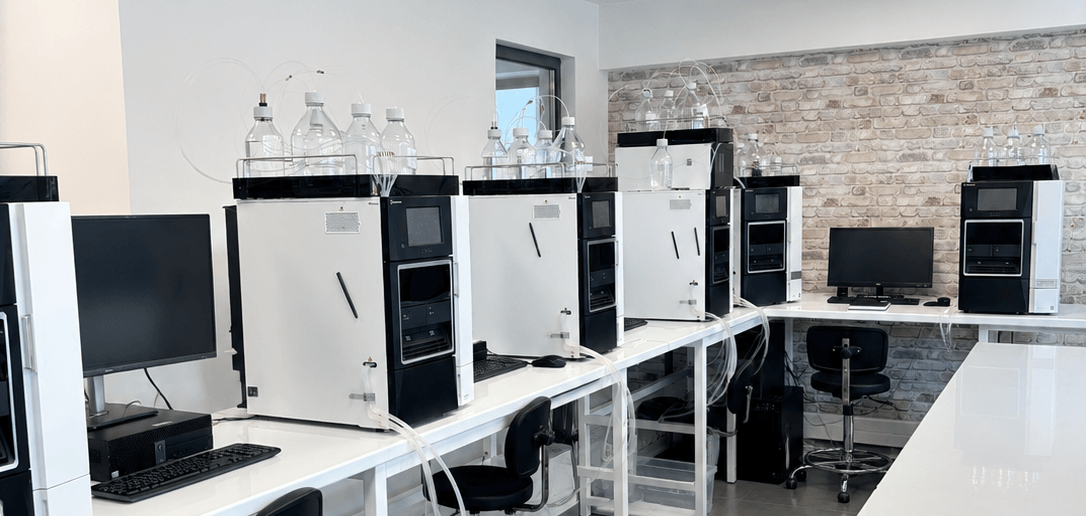
At QACS, we provide comprehensive analytical services, including the transfer and verification of existing analytical methods supplied by the client, as well as the development and validation of customized analytical methods tailored to the requirements of each product and active pharmaceutical ingredient. Our state-of-the-art analytical equipment and scientific expertise enable the support of a broad range of analytical projects using advanced techniques, including HPLC, UPLC-MS/MS, GC-MS/MS, and HRMS (High Resolution Mass Spectrometry).